
How to Manage Time Per Question and Stay Calm Under Pressure
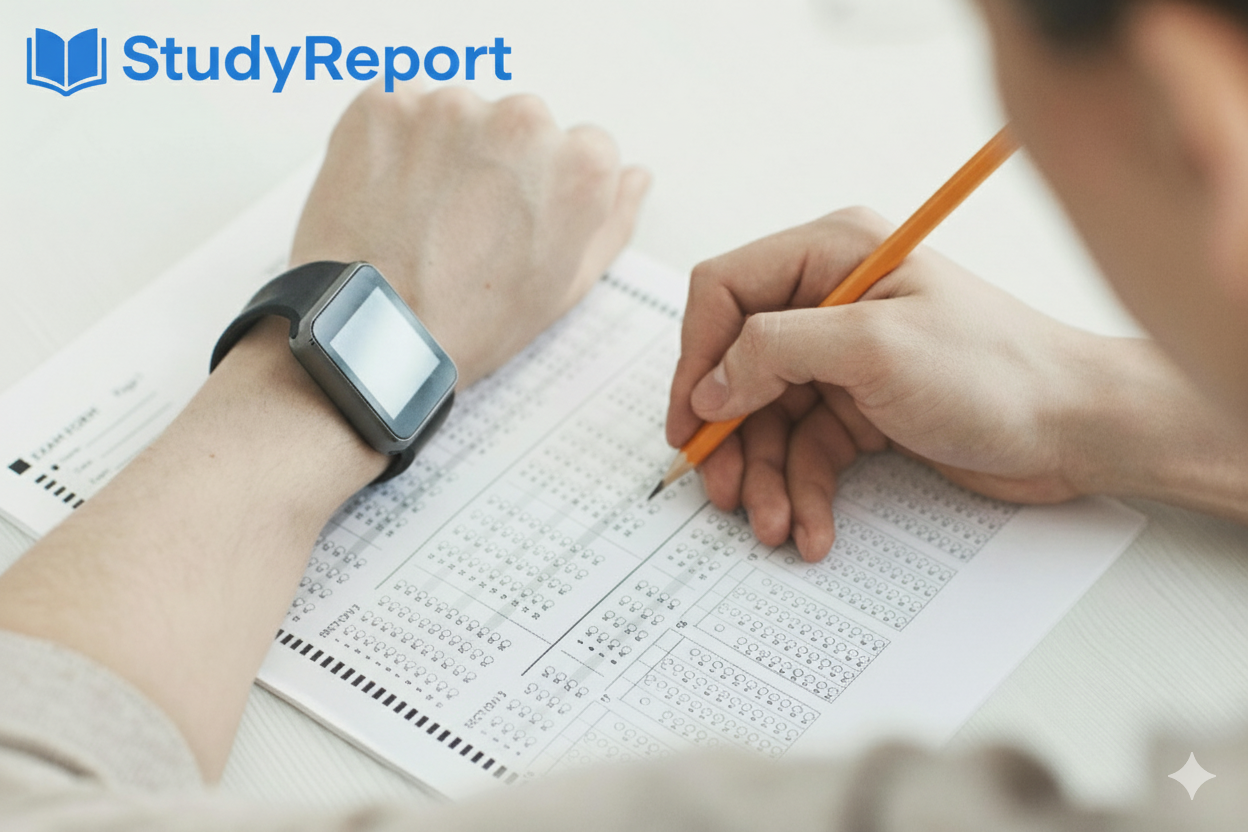
Picture this: you’re sitting in that cramped lecture hall, staring at your exam paper while your heart pounds like you just ran a marathon. The clock on the wall is ticking way too loudly, and you’ve got forty questions to tackle in ninety minutes. Sound familiar?
We’ve all been there. That moment when time seems to move at warp speed while your brain decides to take a little vacation. The good news is that managing your time per question isn’t some mysterious skill that only the naturally gifted possess.
Understanding the Time Crunch Reality
Let’s get real about what happens during exams. Time becomes this weird, elastic thing that either crawls by when you’re stuck on a tough question or flies past when you’re in the zone. Most students make the same mistake: they dive headfirst into the first question without any game plan.
Here’s the thing about exam time that nobody really explains upfront. It’s not just about having enough minutes to answer everything. It’s about using those minutes strategically so your brain stays calm and focused throughout the entire test.
Think about athletes for a second. They don’t just show up and wing it. They have strategies, they practice under pressure, and they know exactly how to pace themselves. Your approach to exam time should work the same way.
The Psychology Behind Time Pressure
Your brain does weird stuff when it senses time pressure. Ever notice how you can solve practice problems perfectly at home, but the same type of question makes you freeze during an actual exam? That’s your stress response kicking in and messing with your cognitive abilities.
When you feel rushed, your brain shifts into survival mode. Blood flow decreases to areas responsible for complex thinking and increases to regions that handle fight or flight responses. Not exactly what you want when you’re trying to analyze literature or solve calculus problems.
The secret is training your brain to stay in learning mode even when time is ticking away. This happens when you feel prepared, confident, and have a clear strategy for how you’ll use every minute of your exam.
Creating Your Personal Time Budget Strategy
Before you even look at the first question, spend two minutes creating a time budget. Sounds boring, but this simple step can transform your entire exam experience. Divide your total time by the number of questions, then subtract about 10% for a buffer zone.
Let’s say you have 90 minutes for 45 questions. That gives you exactly two minutes per question, but you should plan for 1.5 minutes each. This leaves you with extra time to review, go back to tricky questions, or just breathe if you need a moment to reset.
Write your time checkpoints directly on your exam paper. Question 15 should be done by the 25 minute mark, question 30 by minute 50, and so on. These little time anchors keep you aware without becoming obsessed with the clock.
Quick Time Allocation Techniques That Actually Work
Here’s where we get into the nitty gritty of making every second count. Start by doing a quick scan of the entire exam before you write a single answer. This isn’t procrastination; it’s intelligence gathering that helps you allocate time wisely.
During your initial scan, categorize questions into three buckets: easy wins, medium effort, and brain busters. Attack the easy ones first to build momentum and bank some extra time for the harder stuff later. Your confidence will thank you for this strategy.
For multiple choice sections, use the 30 second rule. If you don’t know the answer within 30 seconds of reading the question, make your best guess and mark it for review. Don’t let one tricky question eat up time you need for five questions you could answer easily.
Managing Time When Your Mind Goes Blank
We need to talk about what happens when you hit a mental wall. You’re reading a question, but the words might as well be in ancient Greek. Time is ticking, panic is setting in, and you’re wondering if you studied the wrong material entirely.
First rule of mental blanks: don’t fight them. The more you panic about not knowing something, the harder it becomes to access information that’s actually stored in your brain. Instead, skip the question immediately and come back to it later with fresh eyes.
Use the “brain dump” technique when you feel overwhelmed. Take thirty seconds to write down everything you know about the topic, even if it seems unrelated to the specific question. Sometimes seeing related information on paper helps trigger the specific answer you’re looking for.
Time Tested Strategies for Different Question Types
Multiple choice questions have their own rhythm and timing requirements. Read the question stem first, try to answer it in your head, then look for your answer among the choices. This prevents wrong answers from throwing you off track and saves precious seconds.
For essay questions, spend about 20% of your allocated time planning your response. If you have 20 minutes for an essay, use four minutes to outline your main points and evidence. This upfront investment in time prevents you from rambling or forgetting key points halfway through writing.
Math and science problems require a different approach entirely. Read the entire problem first, identify what you’re solving for, then work backwards to figure out what information and formulas you’ll need. This prevents you from going down calculation rabbit holes that don’t lead to the answer.
The Art of Strategic Time Skipping
Knowing when to move on is just as important as knowing how to solve problems. If you’ve spent double your allocated time on a question and you’re still stuck, it’s time to cut your losses and move forward. Mark it clearly for review and keep going.
This is where having a time budget really pays off. When you know you’re supposed to be on question 20 at the 30 minute mark, you can make informed decisions about whether to spend extra time on a difficult problem or circle back to it later.
Practice the “good enough” mentality for partial credit questions. Sometimes a 70% answer that you complete in the allocated time is better than a perfect answer that takes so long you can’t finish the rest of the exam.
Physical Techniques to Stay Cool Under Time Pressure
Your body and brain are connected in ways that can either help or hurt your performance under pressure. Simple breathing techniques can literally change your brain chemistry in real time, shifting you from panic mode back to learning mode.
Try the 4-7-8 breathing technique when you feel time pressure building. Inhale for 4 counts, hold for 7, exhale for 8. Do this twice between difficult questions, and you’ll be amazed at how much clearer your thinking becomes.
Keep your shoulders relaxed and avoid hunching over your paper. Physical tension creates mental tension, and mental tension makes time feel like it’s moving even faster. Sit up straight, roll your shoulders back, and give your brain the oxygen it needs to function properly.
Real Time Monitoring Without Clock Watching
Constantly checking the clock is like constantly checking how much money you have while shopping. It creates anxiety without actually solving anything. Instead, use your predetermined checkpoints to stay on track without becoming obsessed.
Set your watch or phone to vibrate at quarter intervals if possible. A gentle reminder at the 25%, 50%, and 75% marks keeps you aware of time without the stress of constant monitoring. This way you can focus on the questions instead of the countdown.
Learn to recognize the physical signs that you’re spending too much time on a question. Tension in your jaw, holding your breath, or feeling frustrated are all signals that it might be time to move on and come back later.
Building Confidence Through Time Management Practice
Here’s the truth nobody wants to hear: you can’t learn time management skills the night before your exam. These techniques need to be practiced until they become automatic responses, not conscious decisions you have to think about under pressure.
Create practice sessions that simulate real exam conditions, including time limits and distractions. Use a timer for every practice test, and stick to it even when you want to spend extra time perfecting your answers. This builds the mental muscle memory you need for actual exams.
Keep track of how long different types of questions take you during practice. This data helps you create more accurate time budgets and identify areas where you need to work on efficiency or knowledge gaps.
What to Do When Time Runs Short
Despite your best planning, sometimes you’ll find yourself with ten questions left and only five minutes on the clock. Don’t panic. You still have options that can salvage points and prevent a complete disaster.
Switch into triage mode immediately. Scan the remaining questions and tackle the ones you can answer quickly first. Even if you only have time for educated guesses, partial credit is better than blank spaces.
For essay questions with limited time remaining, write a detailed outline instead of trying to write full paragraphs. Many professors give significant credit for well organized outlines that show you understand the material, even if you didn’t have time to flesh it out completely.
The Power of Time Awareness vs Time Anxiety
There’s a huge difference between being aware of time and being anxious about it. Time awareness helps you make strategic decisions and stay on track. Time anxiety makes you second guess yourself and waste mental energy on worry instead of problem solving.
Develop a healthy relationship with the clock by viewing it as a tool rather than an enemy. Time limits aren’t there to stress you out; they’re there to help you demonstrate what you know efficiently. Reframing your relationship with exam time can reduce anxiety and improve performance.
Practice positive self talk about time management. Instead of “I’m running out of time,” try “I’m using my time strategically.” Instead of “I’m too slow,” try “I’m being thorough with important questions.” Your internal dialogue shapes your external performance more than you might think.
Technology and Tools for Time Management
While you probably can’t use apps during exams, you can definitely use technology to build better time management skills during study sessions. Pomodoro timer apps help you practice working within specific time limits without burning out.
Use online practice tests with built in timers whenever possible. The more familiar you become with working under time constraints, the more natural it feels during actual exams. This familiarity reduces anxiety and improves your ability to think clearly under pressure.
Some students find that wearing a watch with a countdown feature helps during exams. You can set it for your total exam time and glance at it occasionally without the disruption of checking your phone or looking around for wall clocks.
Learning From Time Management Mistakes
Every exam teaches you something about your relationship with time, whether the experience was positive or negative. After each major test, spend a few minutes reflecting on what worked, what didn’t, and what you’d do differently next time.
Did you spend too much time on early questions and feel rushed at the end? Did you skip too many difficult questions and miss opportunities for partial credit? These insights help you refine your approach for future exams.
Keep a simple log of your time management successes and challenges. Over time, patterns will emerge that help you understand your strengths and areas for improvement. This self awareness is incredibly valuable for reducing anxiety and improving performance.
Creating Calm in the Storm
When everything feels chaotic and time seems to be slipping away, remember that you have more control than you think. Your preparation, your strategies, and your ability to stay calm are all factors you can influence, regardless of how challenging the exam might be.
Focus on what you can control rather than what you can’t. You can’t make the clock move slower, but you can make smart decisions about how to use the time you have. You can’t make difficult questions easier, but you can approach them systematically and strategically.
Remember that everyone in that room is dealing with the same time constraints and pressures you are. The students who perform well aren’t necessarily smarter; they’re usually just better prepared and more strategic about managing their time and stress levels.
Building Your Time Management Toolkit
Start building your personal time management system now, not the week before finals. Experiment with different techniques during low stakes quizzes and assignments to see what works best for your learning style and personality.
Some students thrive with strict time limits and military precision. Others do better with flexible guidelines and built in buffer time. There’s no one size fits all approach, so find what works for you and practice it consistently.
Create a pre exam ritual that includes setting up your time management system. This might involve writing time checkpoints on your paper, setting your watch, or doing a few calming breaths. Having a consistent routine helps signal to your brain that you’re prepared and in control.
Your Future Self Will Thank You
The time management skills you develop for exams don’t just disappear after graduation. These same techniques help with job interviews, work presentations, professional deadlines, and pretty much any situation where you need to perform under pressure.
Learning to stay calm and strategic when time is limited is honestly one of the most valuable life skills you can develop during college. It’s not just about getting better grades; it’s about building confidence in your ability to handle whatever challenges come your way.
Every time you successfully manage your time during an exam, you’re proving to yourself that you can handle pressure and think clearly when it matters. This self confidence becomes a foundation for future success in ways you might not even realize yet.
The Bottom Line on Time and Pressure
Managing time during exams isn’t about becoming a robot who can solve problems at lightning speed. It’s about developing a strategic mindset that helps you use your time wisely while staying calm enough to think clearly and perform at your best.
The techniques in this guide aren’t magic bullets that will instantly make you a time management master. They’re tools that become more effective the more you practice using them. Start incorporating them into your study routine now, and by the time finals roll around, they’ll feel natural and automatic.
Remember that good time management during exams starts long before you sit down to take the test. It begins with thorough preparation, continues with strategic practice, and culminates in calm, confident execution when it matters most.
Your ability to manage time under pressure is a skill, not a talent you’re born with. Like any skill, it gets better with practice, patience, and the right techniques. Every exam is an opportunity to get a little bit better at staying calm and using your time wisely.
So here’s my challenge for you: what’s one time management technique you’re going to start practicing this week, before the pressure is really on?


